
*”In Internet aesthetics, liminal spaces are empty or abandoned places that appear eerie, forlorn, and often surreal. Liminal spaces are commonly places of transition…” wikpedia.org
I recently changed the online description of my music in all the places to “liminal art pop”.
There’s a risk to that. Arguably it’s not a description you can “hear” (which places it at odds with most of my favorite prose about music), and it can be taken in a few different ways. It also aims to broaden the use of the widely understood term “liminal music”** in a way many would refute (usually the term refers to the specific type of music that would accompany visuals of liminal spaces: remote, impressionistic, nostalgic).
**”Liminal Music is functional music that exists solely to be played as a background signal, an acoustic wallpaper composed to be heard but not listened to.” primaverasound.com
Nevertheless – I’m pretty committed to the new description. I’ve long been obsessed with liminal spaces and what they signify, even before I knew what they were called, and thematically my music is fixated on transition states, ghosts, longing, memory. The photography that accompanies my music often qualifies as liminal. Also, though my vocal delivery has roots in musical theater and therefore demands attention, my compositions themselves, particularly in their more experimental moments, would NOT be out of place in these sorts of spaces.
I think this is an appropriate time for the old chestnut, “there are two kinds of people”. I’m sure a lot of people are not self-indulgently reflective enough to detect, let alone be disarmed by, liminal space. And then there are folks like Yours Truly. Liminality and I go way back. Being biracial, queer, and unaffiliated in many ways, my very identity is liminal. Plus, I have what you might call “strange sensitivities”…
This is a story I wear out, but here I go again. Legend has it that, as an infant, I freaked the eff out and wouldn’t stop screaming when my mother lullabied me with Paul Anka’s “Put Your Head on My Shoulder” in our shadowy family room. To this day there’s a detailed visualization I put with this vignette (though I’m sure it’s a concocted memory). I see the room as it was in my childhood, but very dimly lit, the way it would have been in a weird dream or past midnight with only half the ceiling lights on. The paramecia on the Oriental rug swarming, the poorly delineated room corners sighing, and, at my tiny back, the draft of ambiguous danger you get right before shutting a basement door behind you.
Then there was my eighth birthday party: an atypically social affair, with a whole gaggle of classmates invited, and field day-esque games orchestrated by my preternaturally creative mom. I barely remember the majority of the proceedings, which I’m guessing went off without a hitch… but I DO remember the ending. As parents arrived for their children and the room emptied out one by one, my mood incrementally tanked. I remember begging someone, anyone, to stay. When no one did, I tearfully renounced the whole event. Don’t get me wrong, I was already a firmly established introvert. It wasn’t my attachment to my classmates but the rearing up of the emptiness that triggered my distress.
At the time, the average person would not have recognized these things – existential awareness sans distraction, post-festivity reversion to stillness – as “liminal”. In fact, the concept of liminal space only picked up real traction in online communities circa 2019 (and has since reached a saturation point). But, as it turns out, the concept sheds light on so many of the phenomena that over the years has caught me off.
For example, every 18 months or so, I rediscover my fascination with Public Service Announcements.
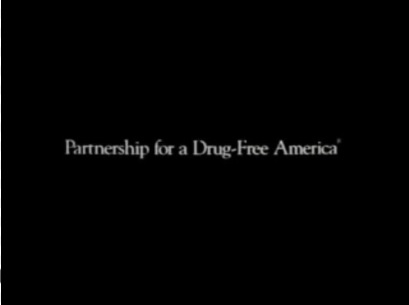
Why are PSAs related to liminal spaces? Well, if you were around in the late 1980s / early 1990s, ask yourself when you were likely to encounter a PSA. It wasn’t uncommon to doze off late at night on the sofa – that passage between the daylight world and the safety of bed – then come to and get cornered in the darkness by one of these things. The self-serious “SIT DOWN. WE NEED TO TALK” tone might seem corny on a sunny afternoon, but when centered and aglow in a black room, it would strike with urgency, like an alarm or The Life-Altering Phone Call. Stupidity of “War on Drugs” politics aside, the Partnership for a Drug-Free America ads took the cake, with their washed-out color palettes, ghoulish visuals, and abrasive sound design. You felt vulnerable to the creative team’s whims, naked and primed for whatever haunting imagery they might see fit to show you.
I’d argue that liminal space is behind another of my bugaboos as well: the creepy feeling I get when I look at certain movie title cards from the 1970s. What recently reminded me of this was a re-visitation of The Stepford Wives (1975). Title cards are transitional; they reside precisely where one is poised to succumb to the vortex of the film. Add an idiosyncratic, aggressively dated font undersigned with a cryptic string of fine print and Roman numerals I can barely read, and I’m officially unsettled.

Discussions of childhood nostalgia and fear abound on the internet these days, which I think is a net positive that helps people of a certain age feel less alone (though also less unique). As it turns out, there is a glut of liminal space discussion by video essayists on YouTube. It was there that I recently discovered the concept of liminality can be applied, not just to physical locations, but also to windows of time. For instance: the time between one TV show and another.
I wasn’t quite the right age to count Spongebob Squarepants as a formative influence. But given my acute sensitivity to my own childhood media, I was still interested to hear content creator YourEverydayTheorist, among others, dissect why the Spongebob outro shook so many members of his generation. In addition to the music, which is jaunty and retro but also distorted (thus making the familiar feel slightly awry), he describes closing credits themselves as a liminal space. They are transitional periods where one episode of entertainment has ended and the next has not yet begun. You are without diversions, left with your own thoughts and fears, AND you are vulnerable to whatever is coming up next.
This helps explain why I was rattled by Ubu’s bark, the imploring child saying “DIC”, the fearsome galloping of the TriStar horse, the sanguine explosion of the Millar-Gough ink bottle – all essentially semiotics suspended in a void, in a space between. And, of course, I can claim a tugging feeling between heart and gut during the closing credits of my own formative media, namely the movie musicals I watched on a loop as a kid: Annie, Labyrinth, Neverending Story, Fern Gully, signaling an end to the fun and a return to responsibilities.
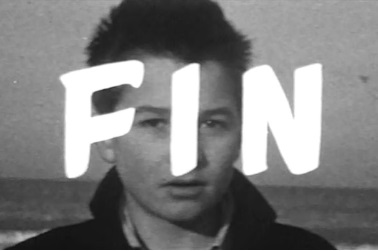
I’d also extend this to the feels I get from the Janus Films branding that often opens (and the “FIN” or “SLUT” that frequently closes) whatever Criterion Collection foreign film just niggled me with questions of absurdity and mortality. And don’t even get me started on sustained freeze-frames that signal death or loss of innocence and make you just LOOK AT THEM for longer than anyone’s comfortable.
Or the haunting open ends of certain songs, like Tori Amos’ “Tear in Your Hand”, that hang in the air unresolved (and that one happens to be followed by the harrowing a cappella testimony of “Me and a Gun”).
My closest equivalent to the experience of the Spongebob kids is probably the short films with which PBS would fill airtime when one syndicated show would end several minutes before the top or bottom of the hour. I can’t recall any of the content, but I can still feel what it was like to be young and inexperienced and shown powerful glimpses of world-wisdom through these bite-sized segments. Being subject to the troubled but wildly creative psyche of whatever filmmaker felt like getting sucked down into a spiral shell, and this is a rush that still feeds my love of film today.
It’s always striking, too, when the creators of shows multi-layered for both kid and adult audiences (Spongebob itself being a great example) spike the punch with mortality awareness. I distinctly remember being caught off guard by the ending of a Woody Woodpecker episode where the red closing curtain fell on Woody’s neck like a guillotine blade. It turned out he was just playing dead, but his being in on the gag just made me feel manipulated.

Speaking of which: susceptibility and loss of control are a big part of these proceedings. We all know the “watch your back” feeling of lingering in a deserted stairwell or abandoned mall. Liminal space scholars have mentioned that this is probably because it’s clear from the vacancy that you’re in a place no one should be… yet, inexplicably, there you are. And now, despite never having studied philosophy, and not having anywhere near a sufficient grasp of Frederich Nietzsche, name-dropping him here is mandatory. My understanding is, old Fred wrote of a very specific loneliness that is, for lack of better words, EXTRA alone. I can only surmise that the ultimate alone – the thing we rely so heavily on entertainment to distract us from – is that which exists at That Other Threshold. You know – the unavoidable one that even the most-loved individuals will only ever cross alone.
Back to which creator V-Sauce says all our common fears are tied:

Liminal spaces make us feel dread, which of course is fear of the unknown. We can’t guess what we’ll be confronted with down that dingy corridor with the buzzing EXIT sign, or at 12:58 when the levity of our noontime show is over. Interestingly, even for those of us with a cavalier approach to the reality of death, our fantasies might know no bounds of horror.
Truthfully, I’m glad I’m still a young-ish adult at this particular time in history, when whole groups of people are teaming up online to do things like track down the location pictured in a mysterious, viral liminal space photograph called “The Backrooms” (spoiler alert, it was a defunct furniture store turned defunct Raceway in Wisconsin). We may all die alone, but in the meantime, getting together to dissect and commiserate over our fears is comforting.
Circling back to my music: I am a liminal artist because my music is suffused with liminality in a handful of different ways. The descriptor just FEELS right. This is probably a good time to mention that I am well into the making of LP #3, which will be called Distraction Portraiture. It’s filled with… you guessed it… various distractions: overheard conversations, invasive noises, scuffles in the periphery of main events… plus the many varieties of copium we use to keep our minds off the Loneliest Loneliness.
Lastly, here’s an excerpt from a publication by Martin Stephen Frommer that says a lot of the things I just did, but with more gravitas.

 The Sold Kingdom
Leave a comment